
AI necklace photography that shows the length
The first thing a necklace buyer wants to know is where it falls. Photograph the necklace with your phone and get it back worn on a model, at its real chain length, plus a close-up of the pendant and a clean studio shot.
Your first 5 images free · No credit card needed

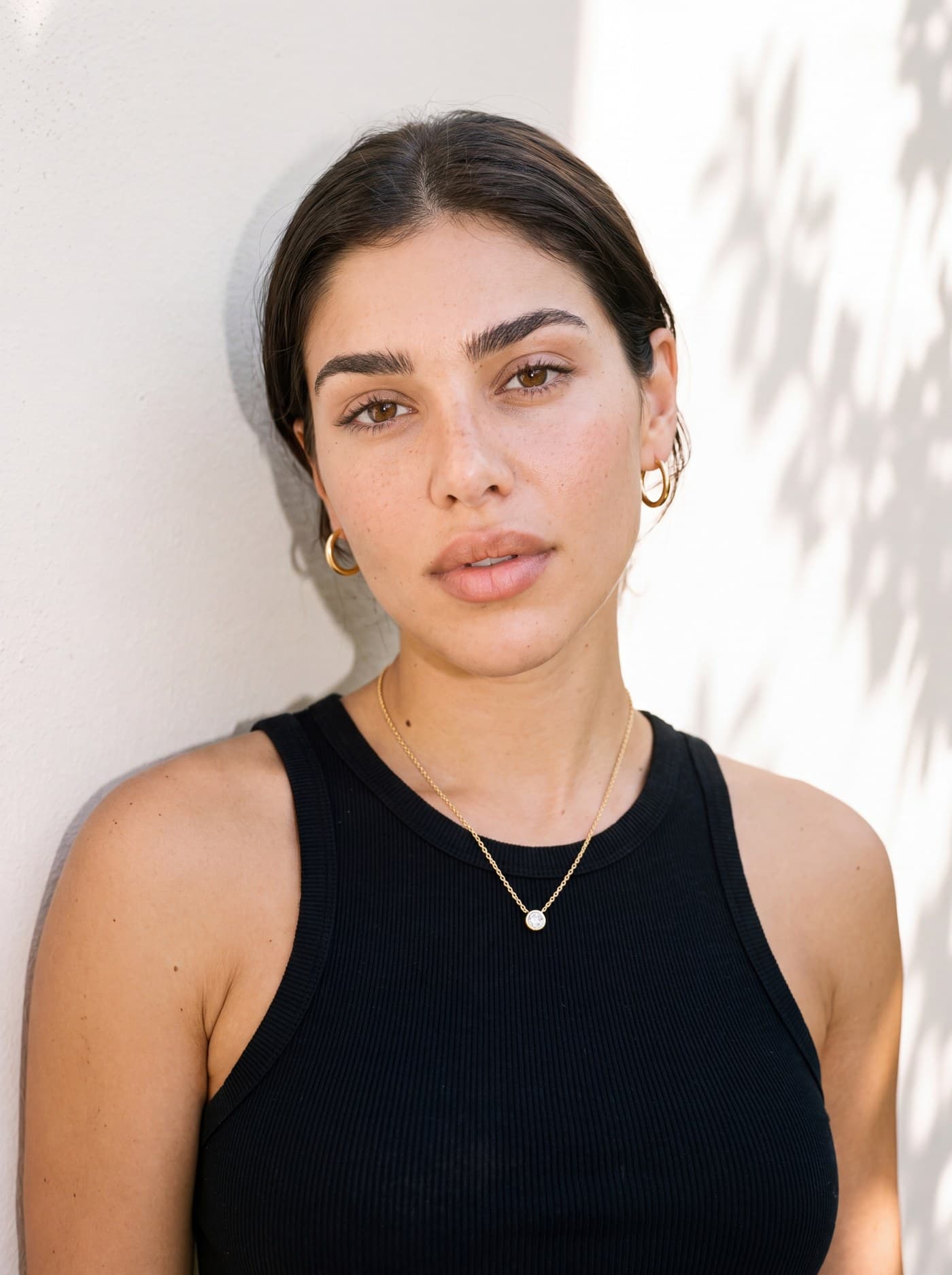
Length is the question that sends necklaces back
A pendant photographed flat on a table tells the buyer what it looks like, but not where it sits. Choker, collarbone, or halfway down the chest? A 40 cm chain and a 50 cm chain look identical laid out on marble, and very different on a person. That gap is exactly what turns into a return.
One photo on a neck answers it. Add the chain length in the description too; the photo shows the drop, the number confirms it.
Necklaces on a model, framed for the piece
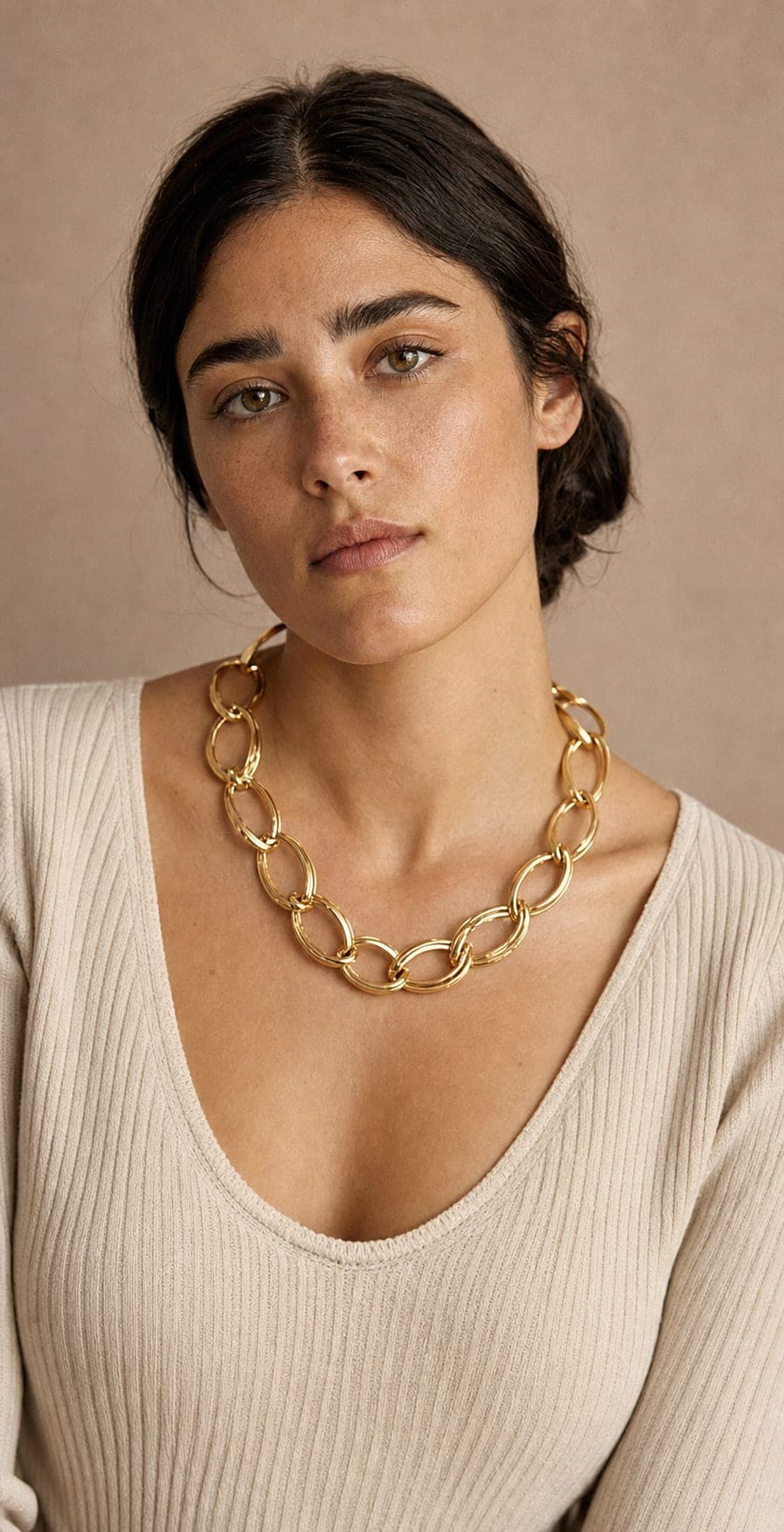
In the jewelry studio, the On our model screen has a necklace setting that puts the necklace around the model’s neck at its real chain length, lying on the collarbone with the pendant hanging at its own length. You pick the frame:
- Neck and collarbone: a close beauty shot with the necklace at the centre, for the pendant and the chain.
- Shoulders portrait: head and shoulders, the necklace clearly visible on the skin.
- Half body: down to the waist, for long chains and layered looks.
Then the neckline: bare shoulders is the cleanest for a necklace, or a black top, an open white shirt, a cream knit or champagne satin. Hair can be worn up for an open neck. A matching set setting shows a necklace and earrings together. More on worn shots in jewelry on model.

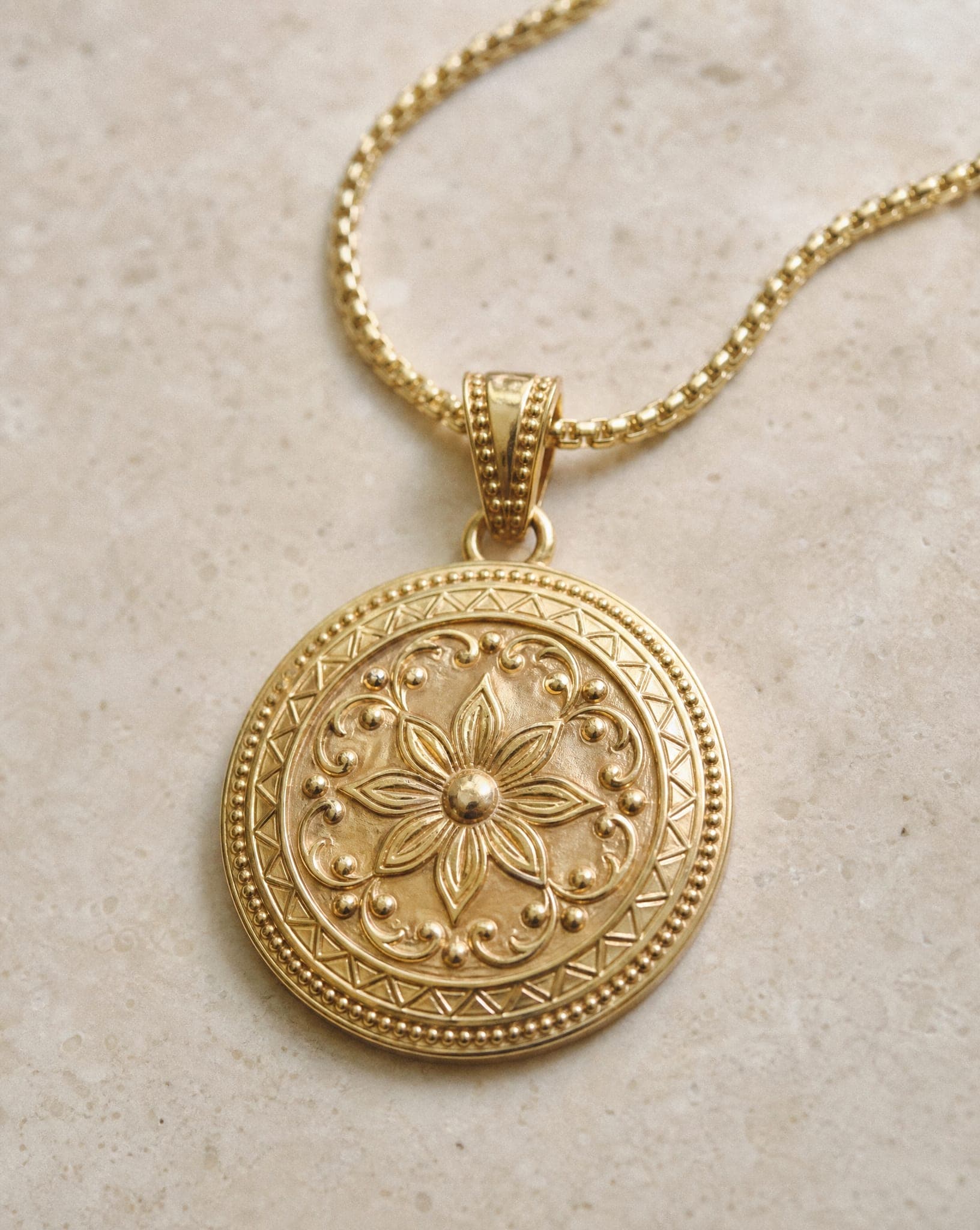
The close-up: pendant, chain and clasp
The worn shot sells the look; the close-up sells the quality. Buyers zoom into the pendant, the thickness of the chain and the clasp before they pay. The Close-up screen lets you choose what to highlight, and the Studio shot screen puts the necklace alone on a clean background for the listing and for marketplaces.
Delicate chains are where AI most often goes wrong: a fine chain can come back thicker than it is. The studio asks for the piece at its real size and describes only what it sees, but always compare the result with the necklace in your hand, and regenerate if the chain or the pendant changed.
How to photograph a necklace for upload
- Lay it out, do not heap it. A chain in a pile hides its shape and length. Lay it in a gentle U on a plain surface, the pendant at the bottom.
- Shoot straight from above. An angle shortens the chain and hides part of the pendant.
- Use a plain, contrasting surface. A fine gold chain disappears on a busy or golden surface. White, grey or a dark cloth works.
- One piece per photo. Several necklaces in one picture make it unclear which one should be worn.
- Soft window light, and a sheet of white paper opposite the window to calm reflections.
What it costs
A standard image costs 5 credits, and the free plan includes 5 standard images a month with no credit card: enough for a worn shot and a close-up of a few necklaces. See pricing for the plans.
Questions
Can AI show my necklace on a model at the right length?
Yes. Choose the On our model screen in the jewelry studio and set the piece to Necklace. The necklace is worn at its real chain length, with the pendant hanging at its own length. Check the result against the real piece.
How should I photograph a necklace before uploading?
Lay it out in a gentle U on a plain, contrasting surface and shoot straight from above in soft window light, one necklace per photo.
Can I show a necklace and earrings together?
Yes. The Set setting on the On our model screen shows a matching necklace and earrings worn together.
Will a delicate chain stay delicate?
The studio asks for the piece at its real size, and fine chains usually stay fine. AI can still thicken a chain now and then, so compare the result with the necklace and regenerate if it changed.
Is it free to try?
Yes. The free plan includes 5 standard images a month, with no credit card.
Show your necklace on a model
Sign up free and get your first 5 images on us. No credit card needed.
Start free